GETTING INTO SHAPE FOR TREKKING:
Backpacking (wilderness trekking) requires physical fitness, yet it is a very basic, natural activity. After all, our ancestors evolved in wilderness and spent many millennia walking while carrying supplies through every kind of wilderness topography imaginable. It has been suggested that we humans are “born to run”, but we are also, without doubt, born to walk.
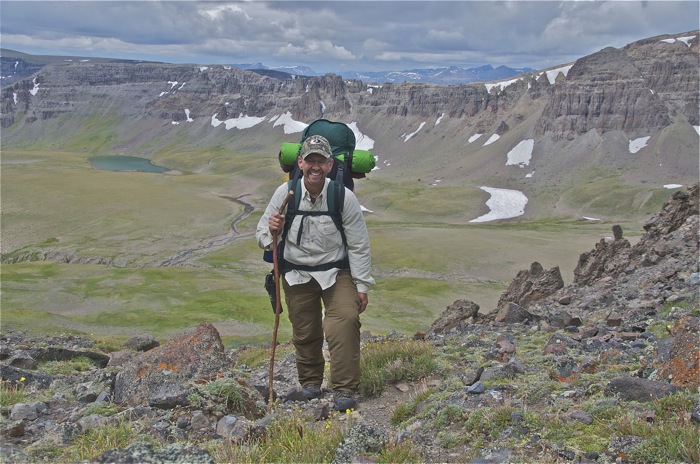
It is important, of course, that all Big Wild trip participants arrive in good enough condition to successfully complete and enjoy their backpacking vacation. Depending upon the trip and your body size, you’ll be carrying a backpack that weighs between 30 and 45 pounds at the beginning of a trip. Most modern backpacks are quite comfortable to carry, provided that they properly fit. The packs we supply our guests are state-of-the-art, and we fit them to you so that you are a happy hiker!
The vast majority of our clients do just fine, even on their first backpack trip. Nonetheless, backpacking is for active, not sedentary people, and in most situations, folks who are seriously overweight or who regularly smoke cigarettes are going to have a tough time and will likely be putting themselves and others in jeopardy.
If you have any doubts about your physical capability to trek in the big wilds, or if you’re going on your first backpack trip, please see your physician. This is especially important for the elderly and for folks who have any known or suspected physical ailments that might compromise their safety (and group safety) on a backpack adventure.
So yes, wilderness trekking is basic to our nature; and it’s usually not too tough for most reasonably active folks who are neither seriously overweight nor cigarette addicts. If you are a habitual cigarette smoker, unless it’s nothing more than an occasional smoke, please consider an alternative vacation to a place where paramedics can quickly respond to your myocardial infarction. There are exceptions, of course, especially among the young, but at the very least cigarette smoking will make those hills really tough!
OK, you’re a reasonably lean fairly active non-smoker. You actually walk places on a regular basis. You’ll probably do well on a moderate backpack trek with no additional work. However, increased exercise for at least a few weeks prior to the trip is always a good idea. It will increase both your safety and enjoyment!
And, if you’re pretty sedentary, training for your trek is essential.
It is important for all to realize that for any backpack trip, the better your condition the more fun you’ll have! And again, the safer you and the rest of the group will be. Out of shape hikers who are struggling on the trail are much more likely to sustain an injury or to have a medical emergency. We at Big Wild try very hard to minimize the risk of either of these scenarios!
If you’re contemplating one of our “fairly strenuous” or “strenuous” adventures, a regular conditioning program becomes essential. Do not expect to get into good backpacking shape simply by taking gentle walks on level ground. For more information on the Big Wild Trip Rating System, please click here.
Cardiovascular conditioning that utilizes the legs is most important. Running and power walking are excellent. However, running isn’t for everyone, especially if there are knee or back or other such joint problems. So power walking, preferably up and down hills (better yet with a weighted pack for strenuous trips), will do the job. Alternating runs with power walks is also a good idea, because cross training minimizes wear and tear from repetitive motion and works a wider variety of muscles than either activity alone. Bicycling is also good training, but only if you ride hard for sustained periods.
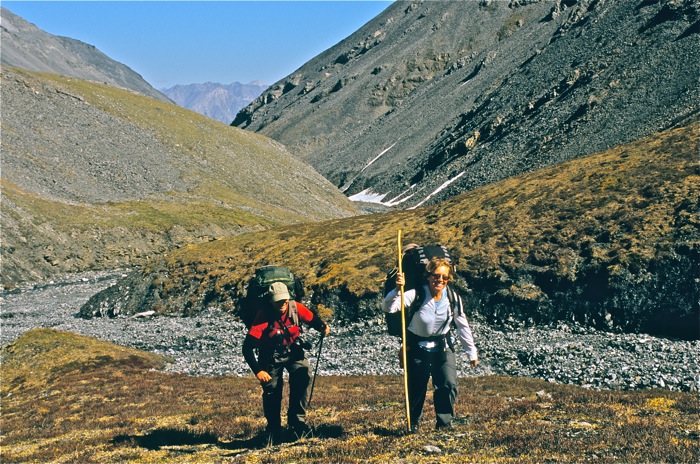
Other good ways to develop or maintain fitness for backpacking include, aerobics classes, yoga, tennis, and basketball. Whatever you do, make sure that it’s fun!
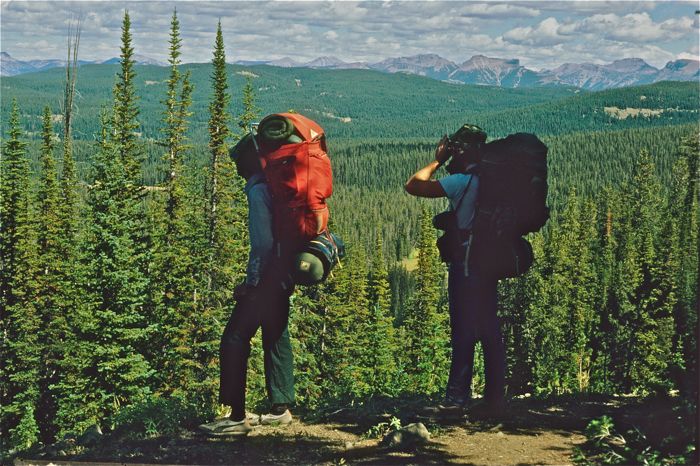 To build cardiovascular fitness, exercise a minimum of a half hour, 3 times per week, although longer more frequent workouts are definitely recommended for our fairly strenuous and strenuous treks. That half-hour minimum, by the way, is at the sustained recommended cardiovascular output. Even for the tougher treks, however, don’t feel like you must train for a marathon. Regular moderate exercise is best for most people. We all reach a point where more is not better. And over-training risks muscle and joint injuries.
Weight training is a great compliment to cardiovascular exercise, especially as you age. That’s because it strengthens both muscles and joints, and keeps your bones strong. And building muscle helps to burn fat.
Remember, though, most healthy, active and relatively lean non-smokers are likely already fit for at least a moderate backpacking adventure. Just taking plenty of regular vigorous walks is a great way for many people to prepare for wilderness trekking.
And again, if you have doubts, we recommend that you get the green light from your physician.
But remember, backpacking in the wilderness isn’t exotic; it’s the most natural thing in the world. We are designed for it. Moreover, once folks begin a fitness program, they find that exercise isn’t just healthy; it’s addictive and it’s fun! It makes us feel good. It improves our mental acuity. And, backpacking is one of the greatest all-around exercises known! As Terry and Renny Russell long ago wrote in On the Loose, “At least if a species has lost its animal strength, its individual members can have the fun of gaining it back again”.